
Emerging Realities #7: From Brick-and-Mortar to Bits: The Journey to RWA Tokenization
The transformation of the storage industry, progressing from warehouses to cloud servers to RWAs tokenization, is a captivating journey intricately entwined across all its facets.

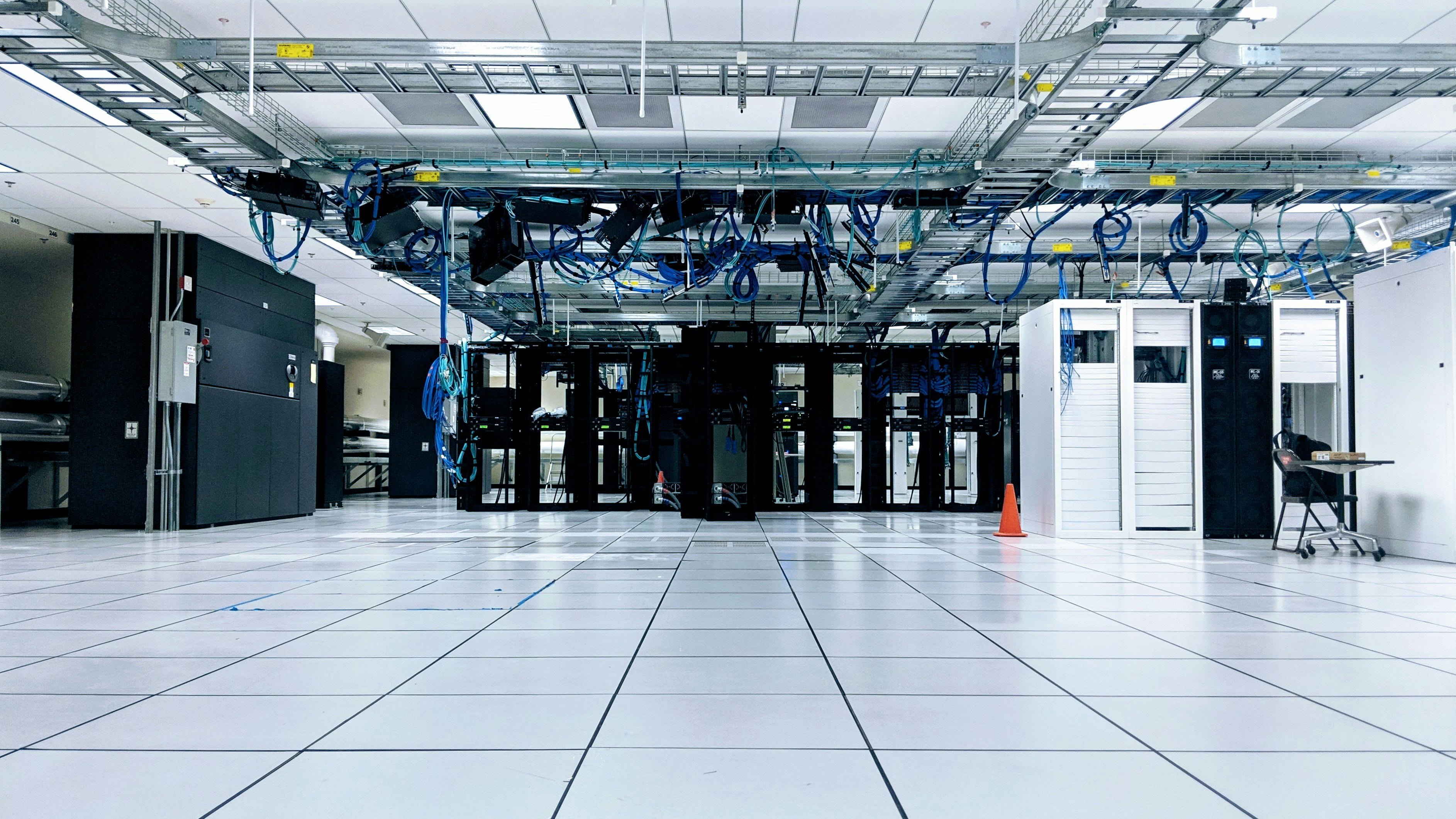
I was always fascinated with virtual storage, data centers, server rooms, and fancy sci-fi-inspired tech domains. What I never expected, is to get hooked on physical storage and warehousing. Yes, like, empty spaces you know? Ever since I started working for Boson Protocol and our stealth sister project focusing on RWA tokenization of high-verification, high-transactional value assets, I can’t get my mind off how important physical storage is. Lend me 5 min to elaborate, I offer a low interest rate and high yield in terms of food for thought. 😏🤜🤛
History of storage in machine-gun speed 🔫
In the days of analog warehouses, storage was merely a physical necessity, a place to store goods until needed. It was a mundane aspect of commerce, hardly garnering much attention. Excluding bank vaults and similar storage units, warehousing in general, was cheap and nothing special really - just empty space.
But then came servers, essentially laying the red carpets for the digital revolution. Suddenly, digital goods and information took center stage, becoming invaluable assets in their own right.
The rise of servers showed us that the intangible could hold immense value, sometimes even surpassing that of physical storage and goods. Data quickly became the currency of the digital age, capable of moving markets and shaping economies that would rely on physical storage.
A step further, as technology continued to advance, we found ourselves facing the constraints of Moore's Law, and despite the incredible progress in hardware, the demand for storage only grew, highlighting the unavoidable bottlenecks that started to affect both the physical and digital domains. Even with nano-level machines at our disposal, the thirst for storage seems insatiable to this day.
Entering the edge computing era, and blockchain databases for storage, custody, and distribution of data, it becomes more apparent that we need digital storage as much as physical storage, now more than ever. Not only cause we need more servers to store digital data but with the introduction of RWA (Real World Assets) Tokenization, also physical storage that would securely host the underlying assets behind their digital counterparts and enable the “Computable Economy” of the immediate future.
In this ever-evolving landscape, storage has transcended its humble origins, becoming a critical component of our digital infrastructure. From warehouses to cloud servers to blockchain-backed storage solutions, the journey of storage mirrors the relentless march of technological progress, shaping the world we live in today and the one we'll inhabit tomorrow.
How tied is physical storage to virtual storage? 📦💾🔢
With more than one in 10 Americans renting storage space, the storage industry has become nearly a $30 billion behemoth.
Storage in general is tight to real estate and the broader land or physical space market, meaning it’s finite. And even if you find the perfect space, it might not be ideal for what you want to store there. Eg. you found a cheap wh in the middle of the desert that was used as a scrapyard, but you need to store meat under regulated conditions.
Taking this a step further, let’s analogize how data works, in a data-first world. Regardless of whether we’re influencers, brands, tech workers, or just casual internet users, we leak approximately 147 MB of data/day. It doesn’t matter whether that data is trafficked by Instagram or Metamask, and if it’s stored on Google, Meta, Ethereum, or IPFS. What’s important is that wherever the data is stored, it takes up server space which translates to physical storage.

In 2016, IBM had predicted that by 2030 we would generate 6ZB worth of data/year. It’s 2024, and we are already generating more than 60 ZB/y. It’s not a surprise that servers are increasingly eating up physical space.
In a previous publication, I argued that the byte was, is, and will be more evidently the real internet currency because it’s directly tied to our digital behavior. A phone in 2006 had a storage unit of 2MB. Today, phones come with pre-installed storage in the range of 128GB-1T. Even a random picture that we take costs around 10MB. That’s x5 times the entire storage space of a phone of the previous generation.
And we can’t expect us to stop anytime soon. As time passes, we would get used to better phones, more sophisticated telecommunication protocols, and more accurate media, eg. animated 3d scans and reproduction of an IRL moment in full detail, casual metaverse lifestyles, and of course real-time digital twins, RWAs, etc. This again, means that no matter what kind of data we produce, who produces it, what platform distributes it or holds it, servers and virtual estate, are required to host that data, which consequently translates to good old simple, non-special warehousing. :)
Verdict
Do I urge you to invest in warehouses? Hmm…probably not - although data suggests it’s a good idea. 🙄
What I’m trying to say here, is that, no matter what we do in the digital world, it’s translated into bytes, into virtual storage, into servers, and eventually into physical storage. Of course, an empty warehouse on its own might not seem so lucrative, but it seems to be that it will be eventually filled up, considering how physical space is occupied over time, and how rapidly the need for virtual storage increases.
FYI, I don’t care about Twitter or Elon Musk anymore. I move where life is gonna be, not where it was. Follow me on Warpcast to stay in touch. ✨
“From Internietcia, viz luv” - Ross Peili


I'm seriously flirting with the idea of buying servers, but not sure how or where to start. 😫